Showing posts with label Technology & Inventions. Show all posts

Friday, January 31, 2014

Water Could Help Make Better Batteries

Water Could Help Make Better Batteries

Images: livescience.com

Water could be the key to producing a cheaper, more environmentally friendly and less dangerous way of making the lithium-ion batteries that power so many everyday gadgets, researchers say.

Currently, rechargeable lithium-ion batteries are typically found in mobile devices such as cellphones, laptops and tablet computers, and they are increasingly being used to power hybrid and electric vehicles. As their uses grow, scientists would like to manufacture the batteries in a manner that's both less expensive and more environmentally friendly.

"The application of lithium-ion batteries in electric vehicles is hindered by their high cost," researcher Jianlin Li, a materials scientist at Oak Ridge National Laboratory, told TechNewsDaily. "For example, the cost of the lithium-ion batteries in the Nissan Leaf and Chevy Colt is about $500 per kilowatt-hour, which is almost five times of the target cost — $110 per kilowatt-hour — of an electric vehicle lithium-ion battery set by the president's EV Everywhere Grand Challenge."

Currently, more than 80 percent of the costs of making lithium-ion batteries are due to materials and the processing of those materials. Scientists at Oak Ridge National Laboratory in Tennessee are now aiming to reduce the price of both of these factors.

All batteries generate electricity by flowing electric current between two electrodes — a positively charged cathode and a negatively charged anode. Cathodes make up about 70 percent of the total cost of high-power batteries, and the organic solvent used to make the lithium ion battery cathodes, N-methylpyrrolidone or NMP, is expensive, toxic and generates flammable vapors. Making batteries with this solvent also requires expensive, explosion-proof processing equipment and costly solvent recovery and recycling systems.
Instead of using NMP, the researchers say they can replace it with a system that uses water, which is much safer, greener and at least 150 times cheaper than the organic solvent.

Replacing NMP with water is tricky because the slurries, or fluids containing the materials used to make the battery's electrodes, behaves in very different ways if water is employed. For instance, water-based slurries are typically not as good at coating the current collector, the material that gathers electric charge from the electrode.

"While it seems quite straightforward to substitute expensive and toxic NMP with water in battery manufacturing, it is very complicated and requires extensive knowledge in science and engineering to realize it," Li said.

The scientists employed a number of different tricks to get water to work. For instance, treating the current collector with electrified plasma alters its surface in ways that makes water-based slurries coat it better. Additives in the slurries also help prevent the particles from clumpingtogether.

Previous work could help scientists manufacture lithium-ion battery anodes using water. However, until now, "no one has been successful with both anodes and cathodes," Li said.

Using this method, the researchers have created a battery that features excellent performance comparable to conventional batteries. Replacing NMP with water promises to reduce the overall costs of lithium ion batteries by about one-eighth, and "the whole process is much more environmentally benign," Li said. "This allows the battery manufacturing more sustainable and affordable."

The scientists currently have a patent pending on their technology. They detailed their latest findings online May 25 in the Journal of Colloid and Interface Science.

Source: livescience.com

COMPUTER SMARTER THAN A HUMAN

COMPUTER SMARTER THAN A HUMAN


AMERICAN ACTORS GARY LOCKWOOD AND KEIR DULLEA IN A SCENE FROM '2001: A SPACE ODYSSEY.' (TRASCENDENTAL GRAPHICS/GETTY IMAGES)

Amid all the phantasmagoric special effects and puzzling symbolism of Stanley Kubrick's 1968 film '2001: A Space Odyssey,' the one detail that sticks in everyone's memory is the HAL 9000 computer that ran most of the spaceship Discovery One's operations. Not only did HAL speak and possess a humanlike personality, but it actually was superior to humans, because it never made mistakes.

But when the year 2001 actually rolled around, what inventor and futurist Ray Kurzweil calls 'strong AI' -- that is, a machine that possesses self-awareness and is equal or superior to humans in intellectual ability -- was still closer to science fiction than reality.

That's with a few caveats. In 2011, the supercomputer Watson went head-to-head with 'Jeopardy!' contestants and won mightily. However, just because a computer can answer questions -- and Watson is a very sophisticated 'question-answering machine' -- it doesn't necessarily mean it's smarter than a human [source: Markoff].

In a 2005 essay, Kurzweil, who estimates that a computer would need to be capable of performing 10 quadrillion calculations per second to match all the regions of the human brain, predicted that threshold would be reached by 2020 [source: Kurzweil]. (Watson uses 80 trillion operations per second, the slowpoke [source: Deedrick].)

Others, such as Microsoft co-founder Paul Allen, have expressed doubts about whether machines ever will be able to even approximate human intelligence. He noted that neuroscientists still don't really know enough about the brain yet to hope to duplicate it. 'You can't create an artificial intelligence,' Allen insisted in a 2012 Forbes interview, 'unless you know how the real thing works.'

BY ROBERT LAMB, PATRICK J. KIGER AND KATE KERSHNER

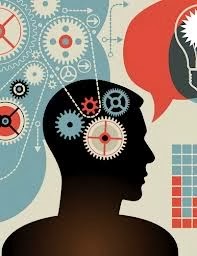
In The Brain at Will

In The Brain at Will


                    Who lives in this marvelous Hall of living walls of mortared osseous tissues fitted with the various ocular, tactual, auditory, olfactory and gustatory doors? This hall of life, the human skull, presents a veritable epitome of a huge State. It includes the range of hilly convolutions of the cerebrum, inlaid with the arterial streamlets and dark rivers of veins. Is this exquisite territory vacant, unoccupied? Is this hall filled just with a senseless mass of physical cells? Is there a book without an author, a child without parents, a clock without a maker, a rose without a designer? Nay—and similarly there are wondrous Ruling Agencies behind thisKingdom of Mystic Beauty. Beneath the dome of the human skull is enacted scenes of intense activity, pulsating life and intelligence. The strange colony of myriads of little brainy cells are guided and controlled by a mixed host of good and impish ...invisible —sprites, pixies and fairies of Unseen Habits.
                   
                   There ....the little blood corpuscles are paddling their tiny boats laden with various vitalcommodities in the arterial stream. There is buying and selling—absorption and elimination ...going on here. The little intelligent cells are engaged in banqueting or introspecting ....or receiving the guests of sensations from the outer sensory doors. Some, are creating mischief by inviting sprites of invisible Disorderly Habits into the Great Common-Wealth.

                    The Habit Lords, and the Commoners—the brain-cells— are gathered together and are furiously debating ....who should assume the responsibility of the Bodily Government. These United States of Flesh have been the scenes of many wars and revolutions. At certain election times, the whole State is in disorder and confusion. Who is going to be President? How many votes will the various candidates receive? Every human Action, mentally or physically performed, is a voter. When a particular Action is repeated, it swells the number of its votes and a huge number of such Actions ...elects a certain Habit-Candidate. Then a collective vote of All Human Action —determines at different periods of life, which Habit is going to be the predominant one and rule supreme.

                  Election by numerical superiority often ignores the qualitative standard. If the majority of voters are morons or criminals, they are bound to blunder and elect the wrong Habit-Candidate. Unless the Voting Human Actions are guided by the supreme law of discrimination, they enslave themselves anew under an Undesirable Ruler.


                  A true Spiritual Democracy in this Bodily Kingdom —necessitates the thorough education of the Voting Human Activities. They should not only depend on their numerical power of repetition, but also on the quality of attentive performance. Above all, they should be trained to be guided by Ideal Rationalism —and warned against the bribing effects of Sentimental Environment, leading to the misuse of their voting powers. The power of reason should select the candidates. Habits of anger, greed, envy, drinking, excessive smoking, coffee or tea drinking, sloth, failure ....result from their being elected to office by unwise hordes of little Actions, whose numerical strength alone elected them ....without thought of the after-effects of enslavement. Habit-Slaves are not born, they make themselves so, unknowingly or knowingly thru their constantly repeated actions. The first drink never made a drunkard; the first act of sensuality ...never made a sensual slave; the first use of dope ...never made a dope-fiend. A series of mechanical or thoughtless repetitions of the wrong action elected the Gripping Habit as Ruler. Quantitative strength won against the weak qualitative voice of reason ...that had no votes because it had not been exercising its powers.

                  Guard yourself against the first performance of Evil Actions. What you will do once ...you are liable to do again. Like a rolling snowball, Habit grows stronger and bigger by repetition. Use your reason in all your Actions — otherwise you become converted into helpless slaves of Undesirable Habits.

                   A strong Bad-Habit —presiding for a long time in the Bodily State, brings chaos and misery. Spiritual famine, mental fevers, universal poverty of body and brain ...exist in a Kingdom thus misruled. A strong Bad-Habit should be impeached before a tribunal of Daily Introspective and Conscience Judges, who should inform the Daily-Offending-Actions that the inevitable outcome of their persistence will be a nervous breakdown, wasted youth and exploded happiness. This constant note of warning ...may serve gradually to awaken the enslaved reason and will of the Habit-Bound Victim.

                   Many excessive smokers, drunkards, sex-slaves are not free because they do not think they are doing wrong and because they don't die immediately. But though the shovels of Habit dig slowly, yet they dig surely ....a yawning untimely grave, preceded by the scorching flames of suffering.

                  Convince your Actions of the tyranny of the Undesirable Ruling Habit first, then begin the work of constitutional agitation and actual impeachment. A whining or sorrowing attitude, remonstrance, or even violent but spasmodic rebellion ...is of little avail. You are the maker of your Habits and you must undo them by regular effort.


                   Relate your Actions to new ...better ways. Keep them continuously —busy, interested, attentive— in serving and fraternizing with Good Actions. If the Actions begin to revert back to their old dangerous associations ...don't get discouraged. Persist, give sufficient time and attention ...and the voting strength of the New Actions will increase and finally get power enough to overthrow the worthless Ruler and elect in his place, their own Good-Candidate Habit.

                   A Bad Habit takes time to attain supremacy, so why be impatient about the growth of its rivalling Good Habit? Do not despair about your Undesirable Habits, simply stop feeding them by repetition.

                   The time used in the formation of Habits ...varies with the individual kind of nervous system and brain cells, and is chiefly determined by the quality of attention. But any Habit can be installed in the brain, almost instantaneously at will, by creating brain-grooves ...thru the power of deep trained attention.                      

                   True Democracy presupposes rational, willing obedience to good laws —ungoaded by Higher Authority or any other external influences whatsoever. Similarly, a Wise Man —one who is really free ...avoids error and performs good —not compelled by Habit—but from free reasonable choice.

                   "To him who hath ...shall be given; but from him who hath not ...shall be taken away —even that which he hath." This Biblical statement is very true of Habits. A man of Good Actions increases in virtue, but a slave of Bad Habits —loses all power of will and reason.

                   All national tastes, human customs —are results of Habits— and are environmental in nature. Love of Americanism or Hinduism is the outcome of Habit and familiarity. When I was a baby —if I had a choice— I would have preferred to be a human chameleon ...free to embrace the desirable aspects of all nations and creeds.

                   Government of Actions by internal self-evolved discrimination —unguided by Good or Bad Habits— imparts unbounded power of will. A man with such power can instantly fix a New Habit in his brain, or stop one at will, without feeling the compulsion of a Habit-President. One must not be dominated by a Good Habit either, because the Habit may be in power ...simply because there has never been any temptation of Evil. Such a Good Habit is not permanently fixed in the nature, because it is born —not from choice and reason, but thru circumstance.

                   One way we can test our power over our Habits is to command the mind to like or dislike a certain food at will. When I first arrived in America, I was served at a dinner —some Roquefort cheese and crackers. No sooner had Mr. Roquefort touched the palate and its arrival become known to the cerebral cells ...than the Habit Lords rebelled and were about to upset the Honored Guests in my stomach. I didn't enjoy this sudden embarrassment, and saw that everyone else at the table was greatly enjoying this particular cheese. I strongly urged my senses to immediately elect the Roquefort-cheese-enjoying Habit. I liked the taste at once and do so to this day.

                   Why do things happen contrary to your desires? Because ...your Habits are also contrary to your desires, and —your Actions flatter your Habits. Your Habits must cater to your True Ideals.

                   Habit is an automatic mental mechanism for performing Actions ......without the labor involved in initiating New Actions. Wrongly used, this mechanism becomes man's arch-enemy. Be practical. Try from today to overcome the hidden Enemy-Habits within you —garbed with your environmental likings—and be free to act from reason alone. Your Habits are not you. Be yourself ...and you will remember the lost image of God within you.


Yaphet Kotto finds Bionic Eye a Sight Saver


Yaphet Kotto finds Bionic Eye a Sight Saver for blindness

Images: www.rd.com

Sightsavers is a large international charity that works to combat blindness in developing countries. It is based in the United Kingdom, with branches in Italy, Republic of Ireland, the United Arab Emirates and the USA.

Sightsavers operates around the world to restore sight to the blind, to provide medical care for the prevention of blindness, and to promote equal opportunities for disabled people.

The charity was founded in 1950 by Sir John Wilson (1919–1999), a blind lawyer. It was originally named "British Empire Society for the Blind" and later became the Royal Commonwealth Society for the Blind. With headquarters at Haywards Heath in West Sussex, it is a charity registered in England & Wales and Scotland.
10 Health Inventions That Will Improve Your Life

Health Inventions That Will Improve Your Life

This bionic eyeball might look like it's been plucked from the skull of a movie android, but it's really a symbol of hope for millions of people with retinal disease and age-related macular degeneration, two major causes of blindness.The invention works like this: A tiny camera, attached to a pair of glasses worn by the patient, gathers images much as a real eye would, then transmits them wirelessly to a titanium-encased microchip on the eyeball. The chip stimulates retinal nerve cells, which then send pictures along the optic nerve to the brain. “The implant can't restore full vision,” says co-inventor John Wyatt, PhD, an engineer at the Massachusetts Institute of Technology, “but our goal is to provide enough that a patient can walk down a familiar street without a cane or a guide dog.” He's aiming for FDA approval within three years. 


Monday, March 11, 2013

Nikola Tesla's Great Invention


Nikola Tesla (Serbian Cyrillic: Никола Тесла; 10 July 1856 – 7 January 1943) was a Serbian-American inventor, electrical engineer, mechanical engineer, physicist, and futurist best known for his contributions to the design of the modern alternating current (AC) electrical supply system.

Tesla started working in the telephony and electrical fields before emigrating to the United States in 1884 to work for Thomas Edison. He soon struck out on his own with financial backers, setting up laboratories/companies to develop a range of electrical devices. His patented AC induction motor and transformer were licensed by George Westinghouse, who also hired Tesla as a consultant to help develop an alternating current system. Tesla is also known for his high-voltage, high-frequency power experiments in New York and Colorado Springs which included patented devices and theoretical work used in the invention of radio communication, for his X-ray experiments, and for his ill-fated attempt at intercontinental wireless transmission in his unfinished Wardenclyffe Tower project.

Tesla's achievements and his abilities as a showman demonstrating his seemingly miraculous inventions made him world-famous. Although he made a great deal of money from his patents, he spent a lot on numerous experiments over the years. In the last few decades of his life, he ended up living in diminished circumstances as a recluse in Room 3327 of the New Yorker Hotel, occasionally making unusual statements to the press. Because of his pronouncements and the nature of his work over the years, Tesla gained a reputation in popular culture as the archetypal "mad scientist". He died penniless and in debt on 7 January 1943.

Tesla's work fell into relative obscurity after his death, but since the 1990s, his reputation has experienced a comeback in popular culture. In 2005, he was listed amongst the top 100 nominees in the TV show The Greatest American, an open access popularity poll conducted by AOL and The Discovery Channel. His work and reputed inventions are also at the center of many conspiracy theories and have also been used to support various pseudosciences, UFO theories and New Age occultism.

In 1960, in honor of Tesla, the General Conference on Weights and Measures for the International System of Units dedicated the term "tesla" to the SI unit measure for magnetic field strength.


Working for Edison

In 1882, Tesla began working for the Continental Edison Company in France, designing and making improvements to electrical equipment.

In June 1884, Tesla relocated to New York City. During his trip across the Atlantic, his ticket, money, and some of his luggage were stolen, and he was nearly thrown overboard after a mutiny broke out on the ship. He arrived with only four cents in his pocket, a letter of recommendation, a few poems, and the remainder of his belongings.

In the letter of recommendation from Charles Batchelor, a former employer, to Thomas Edison, it is claimed that Batchelor wrote, "I know two great men and you are one of them; the other is this young man." (The exact contents of the letter are disputed in McNichol's book.) Edison hired Tesla to work for his Edison Machine Works. Tesla's work for Edison began with simple electrical engineering and quickly progressed to solving some of the company's most difficult problems. Tesla was even offered the task of completely redesigning the Edison Company's direct current generators.

In 1885, Tesla claimed that he could redesign Edison's inefficient motor and generators, making an improvement in both service and economy. According to Tesla, Edison remarked, "There's fifty thousand dollars in it for you—if you can do it"—this has been noted as an odd statement from an Edison whose company was stingy with pay and who did not have that sort of cash on hand. After months of work, Tesla fulfilled the task and inquired about payment. Edison, claiming that he was only joking, replied, "Tesla, you don't understand our American humor." Instead, Edison offered a US$10 a week raise over Tesla's US$18 per week salary; Tesla refused the offer and immediately resigned.

Middle years (1886-1899)

In 1886, Tesla formed his own company, Tesla Electric Light & Manufacturing. The company installed electrical arc light based illumination systems designed by Tesla and also had designs for dynamo electric machine commutators, the first patents issued to Tesla in the US.

Tesla proposed that the company should go on to develop his ideas for alternating current transmission systems and motors. The investors disagreed and eventually fired him, leaving him penniless; Tesla was forced to work as a ditch digger for US$2 per day. Tesla considered the winter of 1886/1887 as a time of "terrible headaches and bitter tears". During this time, he questioned the value of his education.

In April 1887, Tesla started a company, the Tesla Electric Company, with the backing of New York attorney Charles F. Peck and Alfred S. Brown, the director of Western Union. They set up a laboratory for Tesla at 89 Liberty St. in Manhattan so he could work on his alternating current motor and other devices for power distribution, with an agreement that they share fifty-fifty with Tesla any profits generated from patents. It was here in 1887 that Tesla constructed a brushless alternating current induction motor, based on a rotating magnetic field principle he claimed to have conceived of in 1882. He received a US patent for the motor in May 1888. At that time many inventors were trying to develop workable AC motors because AC's advantages in long distance high voltage transmission were counterbalanced by the inability to operate motors on AC. The rotating magnetic field induction motor seems to have been an independent invention by Tesla but it was not a unique discovery at the time. Italian physicist Galileo Ferraris published a paper on rotating magnetic field based induction motor on 11 March 1888, a working model of which he may have been demonstrating at the University of Turin as early as 1885. In 1888, a month before Tesla demonstrated his AC induction motor, Westinghouse engineer Oliver B. Shallenberger invented an induction meter that was based on the same rotating magnetic field principle and during Tesla's demonstration English engineer Elihu 
Thomson stated he was working on an induction motor.

In 1888, the editor of Electrical World magazine, Thomas Commerford Martin (a friend and publicist), arranged for Tesla to demonstrate his alternating current system, including his induction motor, at the American Institute of Electrical Engineers (now IEEE). Engineers working for the Westinghouse Electric & Manufacturing Company reported to George Westinghouse that Tesla had a viable AC motor and power system—something that Westinghouse had been trying to secure. In July 1888 Brown and Peck negotiated a licensing deal with George Westinghouse for Tesla's polyphase induction motor and transformer designs for $60,000 in cash and stock and a royalty of $2.50 per AC horsepower produced by each motor. Westinghouse also hired Tesla for one year for the large fee of $2,000 a month to be a consultant at the Westinghouse Electric & Manufacturing Company's Pittsburgh labs.

During that year, Tesla worked in Pittsburgh, helping to create an alternating current system to power the city's streetcars. He found the time there frustrating because of conflicts between him and the other Westinghouse engineers over how to best implement AC power. Between them they settled on a 60-cycle AC current system Tesla proposed (to match the working frequency of Tesla's motor), although they soon found that, since Tesla's induction motor could only run at a constant speed, it would not work for street cars. They ended up using a DC traction motor instead.

Tesla demonstrated wireless energy transmission (Tesla effect) as early as 1891.


In 1891, Tesla patented the Tesla coil.

Tesla Coil

The Tesla coil is one of Nikola Tesla's most famous inventions. It is essentially a high-frequency air-core transformer. It takes the output from a 120vAC to several kilovolt transformer & driver circuit and steps it up to an extremely high voltage. Voltages can get to be well above 1,000,000 volts and are discharged in the form of electrical arcs. Tesla himself got arcs up to 100,000,000 volts, but I don't think that has been duplicated by anybody else. Tesla coils are unique in the fact that they create extremely powerful electrical fields. Large coils have been known to wirelessly light up florescent lights up to 50 feet away, and because of the fact that it is an electric field that goes directly into the light and doesn't use the electrodes, even burned-out florescent lights will glow.

Source : Wikipedia

Sunday, March 10, 2013

Beetle Robot Heals Cancer

Insect-Shaped Robot Heals Cancer

The idea of a beetle moving around inside your body may be the stuff of horror films. But scientists believe an insect-shaped robot could be a major weapon in the fight against cancer.

The device, just under an inch long, is designed to be inserted into the body through a small incision.

Once inside, doctors can control its movements and direct it to areas where investigations are needed.


The robot measures 2cm in length by 1cm in diameter and can deliver drugs, collect data and treat affected body parts with a range of different attachments.

It would be able to capture images through a tiny camera placed in its "head" - and could deliver drugs through a special injecting device.

Early versions have also included tiny forceps for taking tissue samples. In future these nippers could be used to snip out cancerous cells.

Less than half an inch across, the metal device is encased in plastic to protect its components while in the body. It is connected to a computer by a cable through which it relays data and images.


This can also be used as a "safety line" if the beetle goes off course.

Doctors would be armed with MRI body scans of the patient taken in advance to help them navigate the robot.

However, unlike the plot of the 1966 Raquel Welch film Fantastic Voyage - which featured a microscopic crew and submarine travelling through a scientist's bloodstream - this device could not be inserted into blood vessels because it is too big.

But it could be placed within the digestive tract, where it could be used to seek out and treat cancers of the oesophagus or bowel.

In tests on animals the robot, which weighs around five grams and is roughly the size of a cockroach, is said to have performed very well.

The prototype, which is the result of three years' work by researchers at Ritsumeikan University and the Shiga University of Medical Science in Japan, was unveiled yesterday.

It is not the first time that scientists have developed mini-robots to work inside the body. Other researchers have created ones which are designed to be swallowed and take internal pictures. And U.S. scientists are working on a small robot that enters though an incision to treat heart problems.

However, the latest model is the most versatile and able to perform the most functions.

According to one of its developers, Professor Masaaki Makikawa, this new prototype robot has the ability to perform treatment inside the body, eliminating the need for surgery in some cases. Miniature robots able to move through the body would be particularly useful to investigate and treat tumours in hard-to-reach parts of the body, such as sections of the bowel.

In 2005, New Scientist magazine reported that Italian researchers were developing a six-legged robotic camera that crawls around inside the body and attaches itself to the intestine wall.

Its legs had tiny hooks on the end so it could crawl through the gut without slipping. It also had a special clamp that allowed doctors to stop it altogether if they spotted something of concern and needed to take a closer look.

At the time, researcher Dr Ariana Menciassi, of the Sant' Anna School of Advanced Studies in Pisa, said: "All the indications are that this will be far less uncomfortable than a colonoscopy or gastroscopy in which the intestine is inflated, causing much pain to the patient."  Read more

Source : Mail Online